
The Best Design Is The Design You Can Make
Interview with Guido Cossu – Founder, Technology & Creative Director at Braid Technologies Inc.
BRAID joins us ahead of CDFAM Tokyo, where the team will launch AURA, its computational design platform, starting with stamping. Below, they discuss why sheet metal forming is the first target, how AURA approaches the problem, and what they plan to share with the CDFAM community as major sponsor of the Tokyo 2026 event.

Can you introduce us to Braid Technologies, what the company does, and how the team came together?
Braid was founded to bring software-level scale and speed to industries that build in the physical world.
Today, precious engineering skill and labor is still spent designing single components and working in iterative cycles.
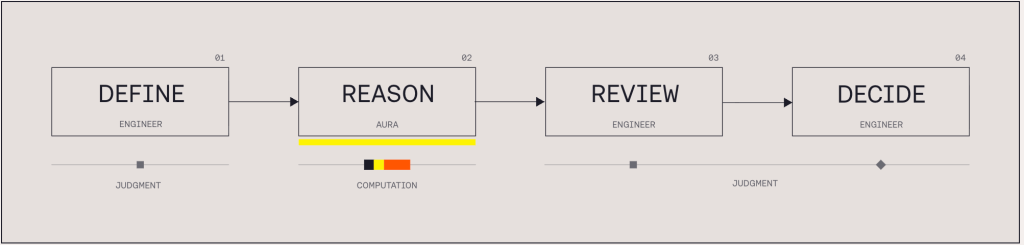
Our mission is to change that by building AURA, an autonomous engineering system that makes engineering intent actionable by an autonomous system. An engineer states what a part must do, where it must fit and how it must be made. AURA reasons from those requirements to manufacturable geometry and explains why its answer works.
We founded Braid in Tokyo around a straightforward conviction: engineering would not be automated by scaling data alone.
Physical design demands a combination of learning, physics, geometry and manufacturing knowledge. Our founding team reflects that combination: Ivo comes from AI research focused on learning from sparse data, Guido from computational physics and large-scale simulations, and Yuta from a long career advising automotive, aerospace and logistics companies.
We are about thirty researchers and engineers from many countries, building AURA, which is already being deployed with major Japanese automotive manufacturers and other selected customers.
What led to the development and launching of the AURA reasoning engine?
Almost every major human ambition eventually becomes an engineering problem: cleaner energy, safer transport, better infrastructure, machines that use fewer resources. Progress depends on our ability to design physical systems, yet that ability remains tied to a scarce supply of expert time.
Engineering software has become extraordinarily powerful, but the fundamental loop in engineering is still manual. A person creates geometry, runs a simulation, interprets the result and starts again. Each new part consumes another bit of human attention. AURA began with the idea that this reasoning can become automated and made scalable.
The physical world imposes a different standard from text or image generation. An answer cannot merely look plausible. It must obey physics and survive the realities of production. That is why AURA combines learning with explicit reasoning about geometry, performance and manufacturing. It is built to produce answers that become real.

What will you be covering in your presentations at CDFAM in Tokyo?
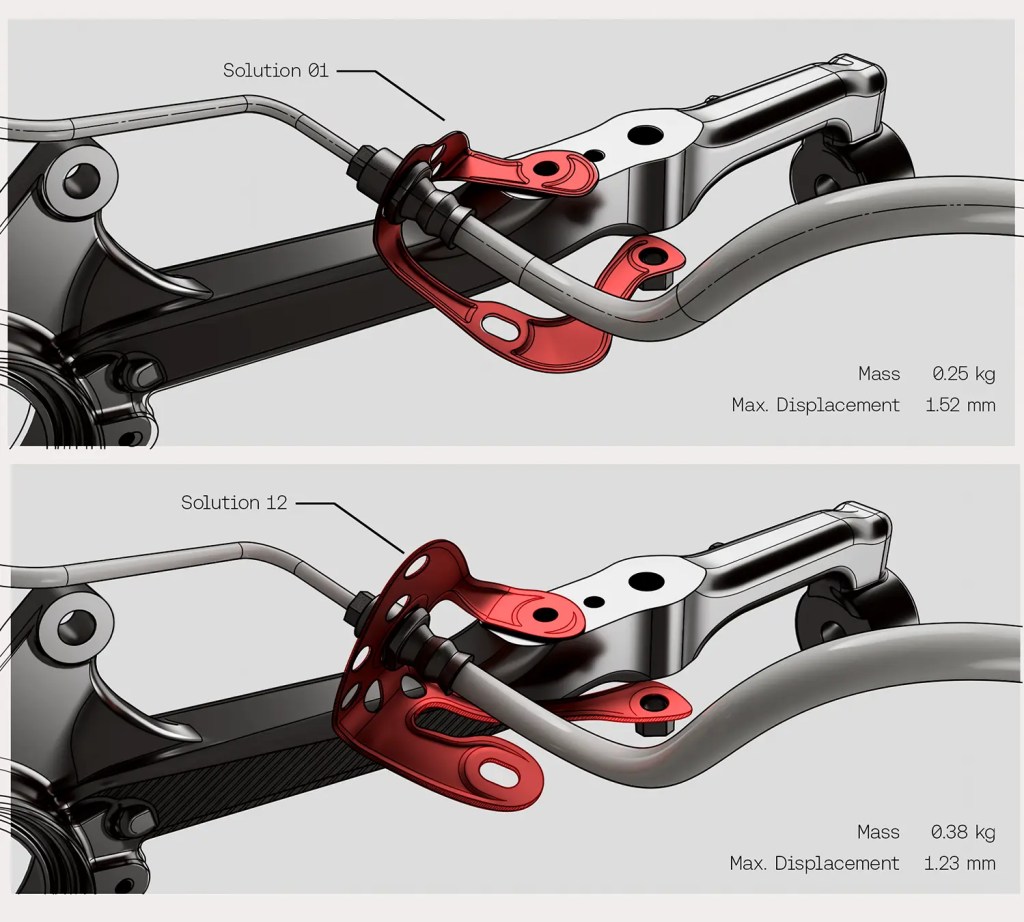
Our presentation explores the difference between merely generating a geometry and autonomously engineering a part. The central question is simple: when can we say that a machine has actually engineered a part?
Our answer is that design must begin with requirements rather than geometry, physics and manufacturing must be solved together, and the result must include an explanation of the reasons leading to it that any engineer can understand.
We will show why manufacturability cannot remain a correction applied at the end. It has to shape the design at every moment of the generation process.
Can you explain how an engineer can interact with the platform, to tweak performance requirements to meet overall tradeoffs, or manufacturing constraints to optimize for efficiency or throughput?
The engineer’s role moves to the highest-value part of design: defining intent and deciding which tradeoffs matter. AURA takes responsibility for working through the geometric and physical implications.
If the engineer changes a stiffness target, a mass limit or the manufacturing process, AURA derives a new design for the revised problem. Each new result reveals something about the whole design space: which requirements are the most important in determining the final shape, where there is freedom and what is the cost of compromising. When we reduce the time to explore alternatives to hours instead of weeks, exploration can become a normal part of engineering rather than a luxury reserved for exceptional components.
Which industries and verticals are you seeing adoption in, and which manufacturing processes has AURA been optimized for so far?
We deliberately began in two of engineering’s most demanding environments: high-volume automotive and aerospace manufacturing.
A small compromise in mass, material or development time becomes significant when repeated across many parts and many vehicles. These industries also demand designs that work within established production processes, where an elegant shape has no value if the factory cannot make it.
Stamping will be the first process supported in our software product, though AURA has also been applied to injection molding and die casting.
These processes are a proving ground for the larger idea: once manufacturing knowledge can be expressed computationally, it can be included directly in the design process rather than appearing later as a limitation to be considered.
What are the signs that a company has an ideal set of problems for exploring an AURA deployment?
When product design cycles are compressed, increased engineering design throughput becomes a competitive advantage. A company that can resolve more design questions before launch can improve its products faster, respond to change sooner and speed up the launch to market.
The clearest signal is that a company has more valuable engineering questions than its people have time to answer. Parts are reused and inherited from the past because redesign is often too expensive. A few specialists become bottlenecks. Promising alternatives remain unexplored. Manufacturing teams repeatedly correct decisions made earlier in design.
AURA delivers the best value when requirements are clearly defined, the manufacturing workflow is established, and similar engineering principles apply across a family of parts.
Rather than relying on a library of past designs or focusing on derivative solutions, AURA reasons directly from physics, material properties, manufacturing rules, and the specific goal defined by the engineer. The greatest opportunity in using it lies wherever high-value engineering expertise is needed but challenging to scale.
How does AURA connect to other design software and manufacturing systems, and what does the data flow look like from engineer input through to production?
For autonomous engineering to transform industry, it must seamlessly integrate into the established chains of trust and validation.
The process starts when an engineer inputs standard CAD geometry alongside the specified material, functional requirements, and manufacturing method. In response, AURA generates manufacturable designs in standard CAD formats, accompanied by a detailed explanation of their performance and underlying rationale.
Rather than relying on direct PLM or PDM integration, the workflow is currently file-based. This design allows engineering teams to evaluate results using their existing software, perform verification with internal solvers, and sign off through familiar approval workflows.
Serving as a reasoning layer between initial intent and final verification, AURA enhances the workflow while preserving the legacy systems organizations depend on.
What do you hope the CDFAM audience takes away from the keynote, and what are you hoping to learn from the other presenters and attendees in Tokyo?
We hope the audience leaves with the idea that the future of design begins when requirements can be translated into concrete computational pipelines, autonomously.
Engineers will define objectives, constraints and acceptable tradeoffs. Machines will reason through the immense downstream complexity. Manufacturing knowledge will move to the beginning of the design process, where it can define what is possible.
This is how engineering gains the scale and speed of software without abandoning the rigor required by the fact that the designs have to survive the physical world.
The additive community has lived closer to this future than almost anyone. It has spent years working with computational geometry, unfamiliar forms and production methods that challenge old assumptions about what a part should look like.
Braid approaches many of the same questions through stamping and casting. We want to learn how this community evaluates novelty, captures manufacturing knowledge and builds trust in a part that no person designed feature by feature.

To learn more about AURA and meet the BRAID team in person, join us at CDFAM Tokyo, October 8-9, 2026, at Tokyo International Forum. Two days of knowledge sharing and networking with leading experts in computational design, AI and ML across engineering, architecture and software development.
BRAID is also hiring; open positions are listed on the CDFAM Job Board, CDFAM Tokyo will be a great opportunity to meet many of their expanding team members in person.


